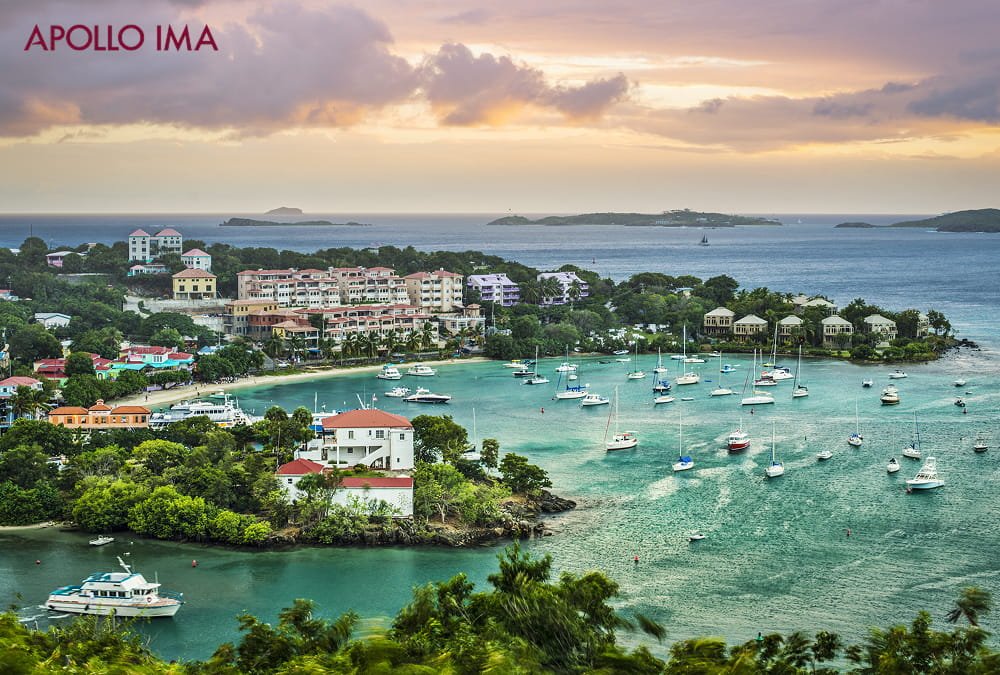

After EU pressure to close by 2028, Antigua is proposing a negotiated 2030 phase-out instead.
Days later, Antigua proposed a third path: commit to ending the program but extend the wind-down to the end of 2030 and secure European technical and financial support for the transition. The government wants time to assess the fiscal, economic, legal, and social consequences of closure while offering stronger safeguards and EU monitoring during the transition.
The economic stakes are substantial. Antigua says the program has generated more than US$518 million since 2013 and expects about US$58 million in CIP revenue in 2026 alone. Developers and regional banks also have financial exposure tied to anticipated citizenship investment, strengthening the government’s case for an orderly, rather than abrupt, exit.
For investors, three distinctions matter. The program has not closed and remains operational. Equally, the proposed 2030 date has not been agreed by the EU and should not be treated as a guaranteed runway. Finally, any eventual agreement will make transition provisions particularly important for applications and investments already underway.
Investment migration programs are government policies, not permanent fixtures. For investors who already consider Antigua the right citizenship solution, the latest developments strengthen the case for evaluating it now rather than assuming today’s framework will remain available indefinitely—while remaining fully aware of the regulatory and transition risks involved.
Contact Apollo IMA for a private consultation to assess whether Antigua’s Citizenship by Investment Program remains the right fit for your objectives and timing.
Hungary Proposes Ending Guest Investor Program From 2027
A draft law could close new applications from January, leaving investors a limited window under current rules.
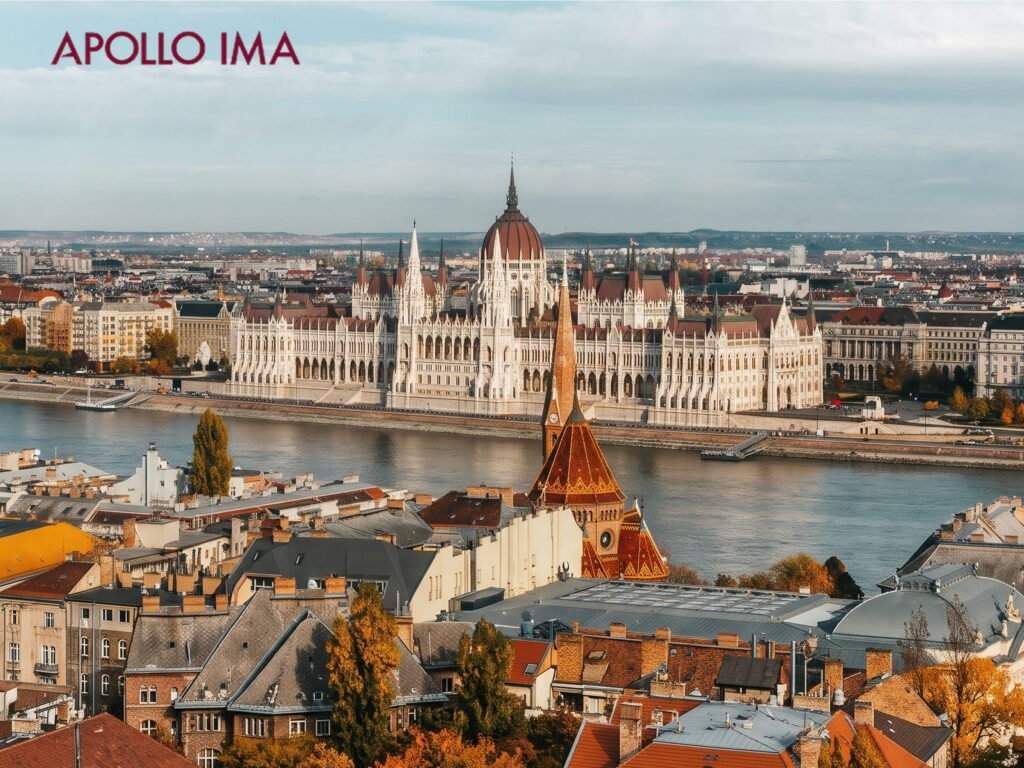
Hungary has proposed abolishing its Guest Investor Visa and Guest Investor Residence Permit Program from January 1, 2027, potentially bringing one of Europe’s longest-duration investor residence routes to an end.
The draft legislation, published on November 4, forms part of a broader package amending laws on law enforcement and public security. Its stated objective is to remove the Guest Investor Program from Hungary’s immigration legislation. If adopted, new applications would no longer be possible from January 1, 2027.
Importantly, the proposal would not immediately cancel existing residence permits. Transitional provisions protect pending applications and current visa holders and investors who already hold residence permits.
Applications submitted and the relevant administrative fee paid by December 31, 2026, would continue under the current framework, while holders of valid Guest Investor Visas issued before the cutoff could still proceed to the residence permit stage.
Existing residence permits would remain valid until expiry, although the draft would remove the ability to extend them further. Family members would also retain their residence rights within the limits of their existing permits.
Hungary introduced the program in 2024. Under the current structure, investors can qualify through a €250,000 investment in approved real estate fund units or a €1 million donation to a qualifying higher education institution.
The residence permit can currently be issued for up to 10 years, with no general minimum-stay requirement, and eligible family members can also obtain residence.
The program therefore remains open today, but the government has formally proposed removing it from law.
For investors who already see Hungary as a strong fit for their long-term mobility strategy, the remaining 2026 window now warrants serious consideration rather than assuming the route will continue into next year.
Contact Apollo IMA for a private consultation on Hungary’s Guest Investor Program and whether the current window aligns with your objectives.
Why Investment Migration Will Always Evolve but Never Disappear
Across cycles of policy change, programs are redesigned, replaced, or introduced as governments adapt to new economic and strategic realities, but the underlying demand for mobility, optionality, and capital will continue to keep the industry relevant.
Investment migration has never been a static industry. Programs are created, amended, restricted, and sometimes closed as governments respond to changing economic priorities, housing pressures, political considerations, and relationships with other states. Recent developments make that especially clear.
Spain ended its investor visa in 2025. Portugal removed real estate from its Golden Visa framework but retained other qualifying investment routes. Greece has raised property thresholds, restricted short-term rentals, and redirected investment toward specific property categories.
Hungary is also now proposing to close its Guest Investor Program from 2027, while Antigua & Barbuda is negotiating a possible wind-down of its Citizenship by Investment Program under pressure from the European Union. At the same time, Argentina is preparing to enter the market with an entirely new citizenship by investment proposition.
The pattern is not simply one of contraction. It is one of constant recalibration.

Investment migration programs exist because they serve national objectives: attracting capital, supporting development, directing investment toward priority sectors, or strengthening government revenues. When those objectives change, programs change with them.
The practical takeaway is not to chase urgency but to prepare before urgency is imposed on you. Today’s route may not exist on the same terms when you eventually decide to act, so the better approach is to understand your options early, assess them carefully, and be ready to move when the right opportunity aligns with your long-term objectives.
That requires looking beyond headline benefits. Policy direction, implementation timelines, alternative routes, and the consequences of waiting all need to form part of the decision.
Apollo IMA helps clients navigate that uncertainty by assessing available programs against their family, mobility, and investment objectives while considering how regulatory developments may affect those options over time.
If securing greater freedom of choice forms part of your long-term strategy, contact Apollo IMA for a private consultation to understand which routes are available today, which are changing, and where timely action may matter.
Türkiye CBI: When the Asset Matters as Much as the Passport
When a second citizenship requires significant capital, the question becomes: what value is that investment creating beyond the passport?
Passport strength usually dominates CBI comparisons, but the structure and recoverability of the qualifying investment can be just as important to your long-term outcomes. Recent uncertainty around Caribbean CBI makes this increasingly relevant.
Caribbean citizenship can appear stronger on paper. Several programs offer lower entry points, alongside established processing frameworks, family inclusion, and, most notably, visa-free Schengen access.
For frequent European travelers, avoiding repeated visa applications for short business trips, holidays, or family visits has real value. But that access remains limited to short stays—generally 90 days within any 180-day period—and does not provide the right to live or work in Europe.
The lower investment thresholds also need context. The most accessible Caribbean routes are typically non-refundable contributions, meaning the qualifying capital secures citizenship but is not recovered.
Other structures, including prescribed bonds or investment vehicles where available, may preserve some or all of the principal after a required holding period but offer considerably less control over how that capital is deployed.
Qualifying Caribbean real estate can provide an investment alternative, although it is commonly restricted to approved developments and subject to program-specific holding and resale conditions.
Türkiye presents an entirely different value proposition: the qualifying capital can be deployed into a broad, open real estate market where the investor can actively select for rental income, location, appreciation potential and eventual resale alongside the citizenship itself.
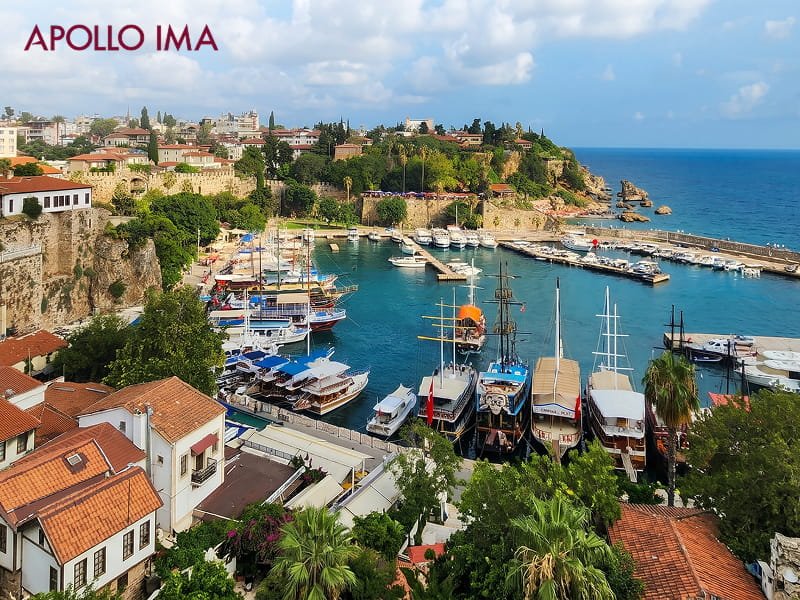
Investors can qualify for citizenship by acquiring at least US$400,000 in real estate and holding it for three years. The investment can also be distributed across multiple qualifying properties, allowing the portfolio itself to be shaped around an investor’s objectives.
That could mean prioritizing rental income, selecting an established neighborhood or development with resale demand, choosing a new developer project with longer-term appreciation potential, or spreading the qualifying amount across more than one suitable asset.
The scale of the underlying market also matters. More than 1.09 million homes changed hands in Türkiye during the first nine months of 2026, including over 733,000 secondary-market transactions. Foreign buyers represented only 1.5% of September sales, showing that demand is overwhelmingly driven by the wider domestic market rather than citizenship investors alone. That gives qualifying property a broader potential resale base when the three-year holding period ends.
Property prices were also 22.3% higher year-on-year in nominal terms in September. That should not be mistaken for a guaranteed return – Türkiye’s inflation, currency movements, location and entry price can materially change the outcome – but it demonstrates an active market where investment performance can be evaluated independently of citizenship eligibility.
This is also where the comparison with Caribbean CBI real estate becomes relevant. Caribbean routes can offer excellent hospitality assets and defined returns, but qualifying investments are commonly restricted to approved developments and subject to program-specific resale and holding rules. Türkiye provides access to a substantially broader developer and secondary market, with the statutory citizenship holding restriction ending after three years.
This is not an argument that Türkiye offers the stronger passport, but a case for how a second citizenship can come with an asset capable of serving a financial purpose beyond the passport itself.
Apollo IMA’s dedicated team in Türkiye gives clients access to developer and secondary-market opportunities, evaluates pricing, rental potential and resale prospects, and manages the property acquisition and citizenship process end-to-end.
Contact Apollo IMA for a private consultation to build a Türkiye CBI strategy around both your citizenship objectives and the performance of the capital behind them.
Greece’s Golden Visa Is Finally Clearing Its Biggest Bottleneck
Permit issuance is now outpacing new applications, while where an investor files can still materially affect processing time.
Processing delays have long been one of the more significant practical concerns surrounding Greece’s Golden Visa. The latest figures suggest that pressure is finally easing.
Pending applications fell from a peak of 52,821 in March 2025 to 25,970 by September 2026. Importantly, 19,008 of those pending cases relate to family members, leaving 6,962 applications involving main investors.
The stronger signal is the pace of approvals. Greece issued 10,677 initial permits to main investors in the 12 months through September, compared with 5,136 new applications during the same period. Initial permits have outnumbered new applications every month since April 2025, showing that the system is actively working through accumulated cases rather than simply benefiting from lower demand.
Demand has also begun to stabilize. While applications were down overall in 2026, almost all of that decline occurred between January and April. From May to September, volumes were broadly in line with 2025, with August and September actually exceeding the same months a year earlier.
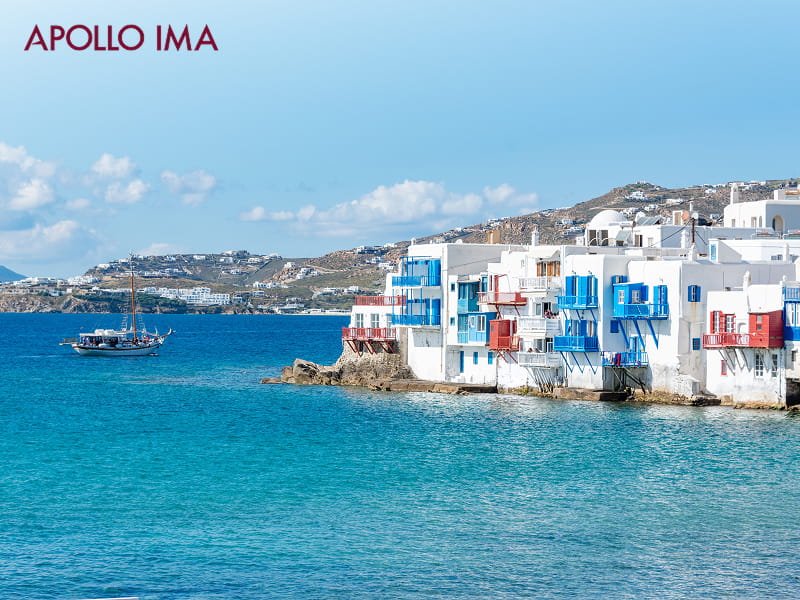
Processing remains uneven. Attica accounts for 73% of pending main-investor cases, while some regional administrations are reportedly issuing Golden Visa cards within approximately three months. Since investors can file in any region regardless of where the property was purchased, application strategy can materially affect timing.
Greece has not eliminated processing risk, but one of the program’s biggest operational weaknesses is visibly improving.
Apollo IMA helps investors coordinate qualifying property selection and the residence process together, with on-ground support designed to reduce avoidable delays and improve execution from investment through to permit issuance.
Contact us today for a private consultation on the Greece Golden Visa.
The minimum investment threshold is the figure investors see first, but it rarely reflects the full cost of securing and maintaining residency.
European residency programs are often compared by their headline entry points, but the real financial commitment extends well beyond the qualifying investment itself. Government fees, transaction costs, professional charges, ongoing ownership expenses and eventual exit costs can all materially affect what an investor ultimately pays.
Greece remains primarily property-led. Investors can qualify through real estate from €250,000 for specific conversion or restoration properties, €400,000 in other eligible areas, or €800,000 in designated high-demand markets. Beyond the purchase price come transfer taxes, notary and legal fees, registration costs, maintenance, insurance and eventual selling expenses. Property selection therefore affects both eligibility and the total cost of ownership.
Portugal no longer permits real estate investment under its Golden Visa. Popular routes include a €500,000 qualifying fund investment or a €250,000 cultural contribution, alongside other qualifying research and business routes. Fund investors must account for government fees, legal costs, subscription charges, annual management fees, possible performance fees and eventual exit conditions. A cultural contribution, meanwhile, is non-refundable.

Malta’s MPRP makes the gap between the headline proposition and the full commitment particularly clear. Applicants must either purchase qualifying property from €375,000 or rent from €14,000 annually. On top of the property requirements sit a €37,000 government contribution, €2,000 donation and €60,000 administrative fee—a combined €99,000 in fixed, non-refundable program costs before residence cards, professional services, dependent fees and property-related expenses are considered.
These additional costs do not make one route inherently better or worse. They simply demonstrate why the minimum qualifying investment should never be mistaken for the final price of obtaining residency.
Government fees, transaction expenses, maintenance costs, professional charges and eventual exit costs can all materially change the financial commitment. Investors should understand that full cost structure before entering a program, rather than budgeting around the headline threshold alone.
Contact Apollo IMA for a private consultation to look beyond the headline investment and assess the full costs, capital commitments and long-term fit of each residency option.