
To apply for Turkish citizenship by investment, you choose one of four qualifying investment options, work with a licensed agent to submit your application and documents, pass a due diligence check, and receive your Turkish passport once approved. The full Turkish citizenship application process usually takes 3 to 5 months from the day you select your investment. You don’t need to live in Turkey before or after citizenship is granted, and because Turkey permits dual citizenship, you keep your current nationality while gaining a second passport.
That’s the short version. Below is the complete Turkish citizenship process step by step, including eligibility rules, required documents, realistic timelines, costs, and exactly who in your family can be added to the same application.
What Is Turkish Citizenship by Investment?
Turkey launched its citizenship by investment program in 2017. It gives foreign nationals a direct path to Turkish nationality in exchange for a qualifying investment in the country, instead of the standard naturalization route, which in most countries requires several years of continuous residency first. There’s no language test, no exam on Turkish history or culture, and no requirement to spend time physically living there before or after approval.
A Turkish passport gives holders visa-free or visa-on-arrival access to 120+ countries, the right to live, work, and study in Turkey, and access to the country’s tax framework for foreign income. For people researching how to become a Turkish citizen through investment rather than through marriage, employment, or long-term residency, this is the faster and more direct route to a second passport.
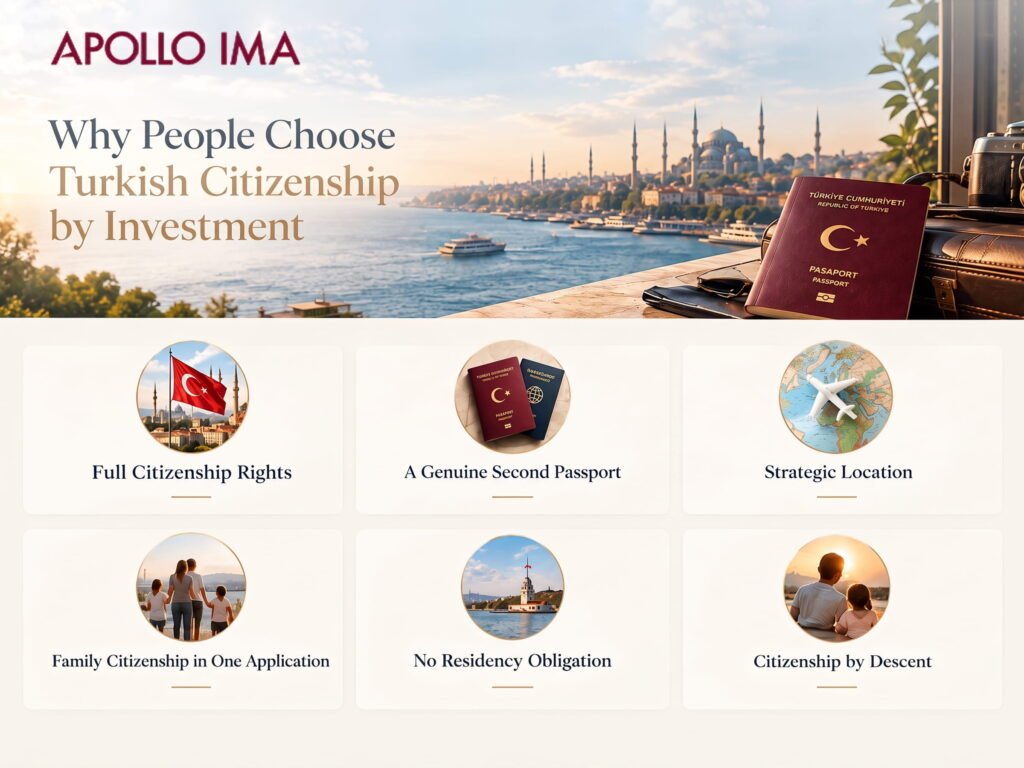
Why People Choose Turkish Citizenship by Investment
Most applicants aren’t pursuing Turkish citizenship for a single reason. It’s usually a combination of mobility, flexibility, and practical family citizenship benefits. Here’s what a Turkish passport actually gives you once naturalized:
- Full citizenship rights. Naturalized citizens gain the same core rights as Turkish-born citizens, including the right to vote, own property, and start a business without the restrictions that apply to foreign nationals.
- A genuine second passport. Turkey allows dual citizenship, so you’re not forced to give up your original nationality to hold a Turkish one.
- Strategic location. Turkey sits between Europe, the Middle East, and Central Asia, which matters for business owners and frequent travelers.
- Family citizenship in one application. A spouse and dependent children can typically be included under the main applicant’s file rather than filing separately.
- No residency obligation. You can hold a Turkish passport without ever living in the country full-time.
- Citizenship by descent. Once granted, citizenship can generally be passed down to future children born after naturalization.
Turkish Citizenship Application Process: Step by Step
Here are the Turkish citizenship application steps in the order they actually happen. This is the same sequence whether you’re asking about the Turkey citizenship application process for a single investment or for a full family application.
- Choose your investment option. Decide which of the four investment routes fits your budget and timeline. Real estate is the most common choice because the investment can be split across more than one property.
- Open a bank account and sign a Power of Attorney. You’ll need a Turkish bank account to move funds, and a legal representative who can handle paperwork on your behalf during the stages you’re not physically in the country.
- Gather and submit your documents. Your agent compiles your full file, including identity documents and proof of funds, and submits it for the residence permit stage.
- Apply for your residence permit. This step requires a mandatory visit to Turkey. It can’t be completed entirely remotely, since biometric and in-person requirements apply.
- Submit your citizenship application. The main applicant and spouse travel to Turkey again, this time for biometrics tied directly to the citizenship file rather than the residence permit.
- Wait for government approval. Authorities review the full file, confirm the investment, and issue an approval letter once everything checks out.
- Collect your passport. After approval, you visit the local Turkish consulate to apply for and collect your physical passport and naturalization certificate.
Most people completing this Turkish citizenship process step by step finish in 3 to 5 months total, assuming documents are complete and there are no delays during due diligence. That timeline is one of the reasons Turkey’s program is often compared favorably against Caribbean citizenship by investment programs, several of which run closer to 6 to 9 months.
Eligibility Criteria
Before starting a Turkish nationality application through investment, it helps to confirm you meet the baseline requirements. The main applicant must:
- Be at least 18 years old
- Be able to demonstrate the legal, verifiable source of the invested funds
- Pass the government’s due diligence and background check
Unlike some citizenship by investment programs, Turkey doesn’t require a language test, a residency history, or a health examination as part of the standard process. The main barrier for most applicants is documentation and proof of funds, not personal eligibility.
Documents Needed for Turkish Citizenship
The documents needed for Turkish citizenship vary slightly depending on which investment route you choose and whether you’re applying with family. The core Turkish citizenship application documents typically include:
- Valid passport copies for every applicant, including dependents
- Birth certificates for the main applicant and any dependent children
- Marriage certificate, if a spouse is included on the application
- Proof of the investment itself (property deed, bank deposit confirmation, or bond purchase receipt)
- Proof of the legal source of funds, such as bank statements, sale agreements, or business records
- Police clearance certificate from your country of residence
- Passport-style photographs for all applicants
- Signed Power of Attorney, authorizing your agent to act on your behalf
Missing or incomplete documents are the single most common reason applications stall, so it’s worth having every item reviewed by your agent before the file is submitted, rather than after.
How Long Does It Take to Get Turkish Citizenship?
People often ask how long it takes to get Turkish citizenship once they’ve committed to an investment. Here’s the realistic, stage-by-stage breakdown:
| Step | Timeframe | What Happens |
|---|---|---|
| Investment Selection | Weeks 1-2 | Choose investment option, open bank account, sign Power of Attorney |
| Residence Permit | Weeks 3-4 | Submit documents, mandatory visit to Turkey |
| Citizenship Application | Weeks 8-10 | Applicant and spouse travel for biometrics |
| Citizenship Approval | Weeks 10-12 | Approval granted, apply for passport at consulate |
| Passport Issuance | Weeks 12-16 | Naturalization certificate and passport issued |
In total, that’s roughly 3 to 5 months from start to finish. The exact figure depends on how quickly documents are submitted and how busy the review authority is at the time of your application, but delays usually come from paperwork gaps rather than the government process itself.
Turkish citizenship by investment typically takes 3 to 5 months from investment selection to passport issuance. The process includes choosing a qualifying investment, applying for a residence permit, submitting biometrics for the citizenship application, receiving government approval, and collecting the passport at a Turkish consulate. No residency in Turkey is required at any stage.
Turkish Citizenship Family Application Process
One application can usually cover your spouse and dependent children, which is what makes the Turkish citizenship family application process practical for people relocating or restructuring their mobility as a household rather than applying one person at a time.

Who typically qualifies for family citizenship under one application:
- Spouse
- Dependent children under 18
- Dependent parents, in some cases, depending on the investment route chosen
Turkey permits dual citizenship, so applicants and their family members don’t have to renounce their existing nationality to gain Turkish citizenship rights. That matters for people weighing a second passport against the administrative hassle, or legal restriction, of giving up their first one. With Turkey, that trade-off simply doesn’t apply.
Investment Options
There are four ways to qualify for a Turkish nationality application through investment. Each one meets the same legal threshold for citizenship, but the structure, risk, and liquidity differ.
| Investment Route | Minimum Amount | Notes |
|---|---|---|
| Real Estate | $400,000 | Held for at least 3 years; can be split across multiple properties |
| Bank Deposit / Fixed Capital | $500,000 | Deposited in a Turkish bank or contributed as fixed capital |
| Government Bonds | $500,000 | Minimum commitment to Turkish government bonds |
| Investment Funds | $500,000 | Share in a real estate or venture capital investment fund |
Real estate is the most commonly chosen option, mainly because it allows the investment to be divided across more than one property while still qualifying for citizenship, and because property can generate rental income or appreciate in value during the required holding period. Bank deposits and government bonds suit applicants who prefer a lower-involvement, liquid option over managing physical property.
How Turkey Compares to Other Citizenship by Investment Programs
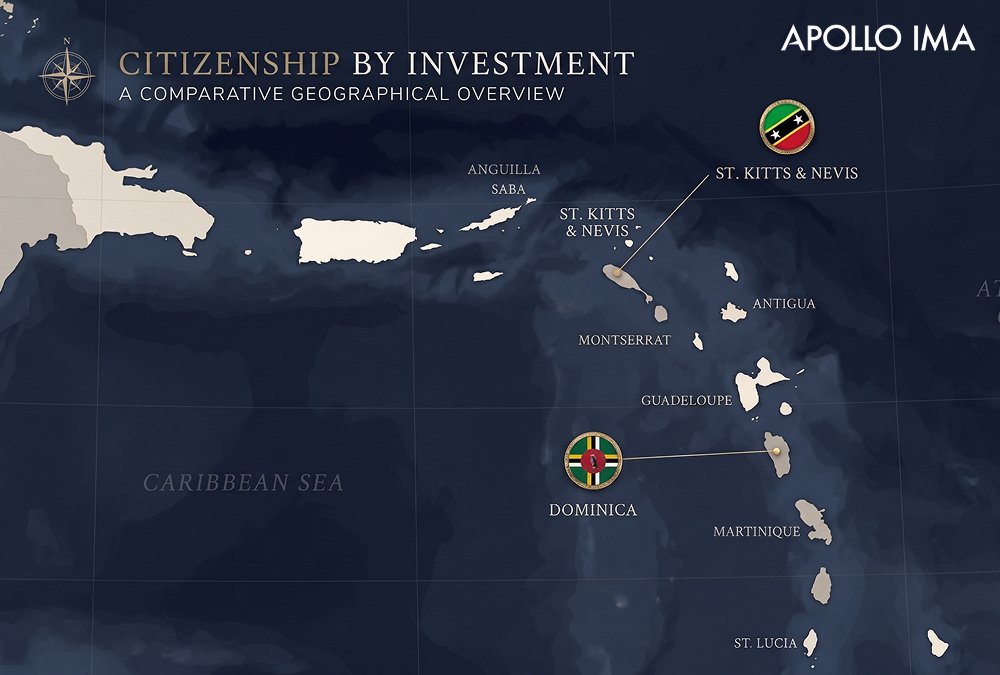
Turkey isn’t the only country offering a direct path to a second passport through investment, and it’s worth seeing how it stacks up before committing to an investment route. The Caribbean region runs several well-established programs with lower entry thresholds but longer processing times. St Kitts and Nevis citizenship by investment starts lower than Turkey’s real estate minimum but typically takes longer to process. Dominica citizenship by investment is generally the lowest-cost entry point in the Caribbean, while Grenada citizenship by investment stands out for applicants who specifically need E-2 visa eligibility for the United States, and Antigua and Barbuda citizenship by investment offers family-friendly pricing for larger households.
Turkey’s advantage is speed and simplicity: no language requirement, no interview, and a 3 to 5 month timeline that’s faster than most Caribbean alternatives. For a side-by-side breakdown of program minimums, timelines, and visa-free access, see Apollo IMA’s full citizenship by investment program comparison, or read the dedicated Türkiye citizenship by investment program overview for a deeper look at the 2026 rules.

Turkish Passport and Citizenship Rights: What You Actually Get
Once naturalized, your citizenship rights in Turkey are largely equivalent to those of citizens born in the country. In practical terms, holding a Turkish passport means:
- The legal right to live, work, and study anywhere in Turkey without a separate visa or work permit
- The right to vote in Turkish elections
- The ability to buy and sell property without the restrictions that sometimes apply to foreign nationals
- Access to Turkey’s public healthcare and education systems
- Visa-free or visa-on-arrival travel to 120+ countries
- The ability to pass citizenship to children born after naturalization
These are the practical reasons a Turkish passport functions as a genuine second passport rather than just a travel document. It carries full legal standing, not a limited or conditional status.
Figuring out which investment route fits your timeline and budget is usually the hardest part of the decision, not the paperwork itself. Apollo IMA works directly with applicants through each stage of the Turkish citizenship application process, from choosing an investment to final passport collection.
Frequently Asked Questions
How do I apply for Turkish citizenship by investment?
You choose a qualifying investment (real estate, bank deposit, government bonds, or an investment fund), work with a licensed agent to submit your documents, complete a residence permit application in Turkey, then submit your citizenship application for approval.
What are the steps to get Turkish citizenship through investment?
The process runs through seven stages: choosing an investment, opening a bank account and signing Power of Attorney, submitting documents, applying for a residence permit, submitting biometrics for the citizenship application, waiting for approval, and collecting the passport at a consulate.
How long does it take to get Turkish citizenship?
Most applicants complete the full Turkish citizenship application process in 3 to 5 months, assuming documents are complete and there are no delays during due diligence.
What documents are needed for Turkish citizenship?
Core documents include a valid passport, birth certificate, proof of investment, proof of legal source of funds, police clearance, passport photographs, and a signed Power of Attorney.
Can my spouse and dependent children apply with me?
Yes. A single application typically covers a spouse and dependent children under 18, and in some cases dependent parents, under the Turkish citizenship family application process.
Do I have to give up my current citizenship?
No. Turkey allows dual citizenship, so you keep your existing nationality while holding a Turkish passport as a second passport.
Do I need to live in Turkey to keep my citizenship?
No. There’s no residency requirement before or after your citizenship is granted, and you’re not obligated to spend any set amount of time in the country.
What citizenship rights do I get with a Turkish passport?
Naturalized citizens gain the right to vote, work, study, buy property, and access public services in Turkey, along with visa-free or visa-on-arrival travel to 120+ countries.