Most people researching Dominica’s program start with the headline number, US$200,000, and stop there. That figure only tells part of the story. What actually determines whether an application succeeds, how much it costs, and how long it takes comes down to a set of specific requirements that don’t always make it into the shorter summaries floating around online.
This guide covers those requirements directly: who qualifies, what each family member actually costs to add, how the real estate route’s holding period works, and what’s changed heading into 2026 for Dominica citizenship by investment program.
Basic Eligibility, Before Any Investment
Before the investment figures even matter, an applicant has to meet a set of baseline requirements. These apply to the main applicant and typically extend to any adult dependent as well:
- Be at least 18 years old
- Have no criminal record
- Be in good health, generally confirmed through a medical exam
- Pass background due diligence conducted by the Citizenship by Investment Unit (CBIU)
None of this is unique to Dominica; it’s standard across Caribbean CBI programs, but it’s worth stating plainly since some applicants assume the investment alone guarantees approval. It doesn’t. Due diligence can still result in a decline regardless of the funds available.
Dominica citizenship by investment in 2026 requires a minimum non-refundable contribution of US$200,000 to the Economic Diversification Fund or a minimum US$220,000 investment in approved real estate. Applicants must pass background due diligence, and processing generally takes five to eight months.
The Two Investment Routes, With Exact Figures
Economic Diversification Fund (EDF) Contribution
- Single applicant: US$200,000
- Main applicant plus spouse and two dependents: US$250,000
- Additional dependents under 18: US$25,000 each
- Additional dependents aged 18 and over: US$40,000 each
This is a straight, non-refundable contribution. There’s nothing to hold, manage, or sell later.
Real Estate Investment
- Minimum investment: US$220,000 in a government-approved development
- The property must be held for a minimum of three years before it can be sold on the open market
- If held for five years instead, it can be sold specifically to another qualifying CBI applicant
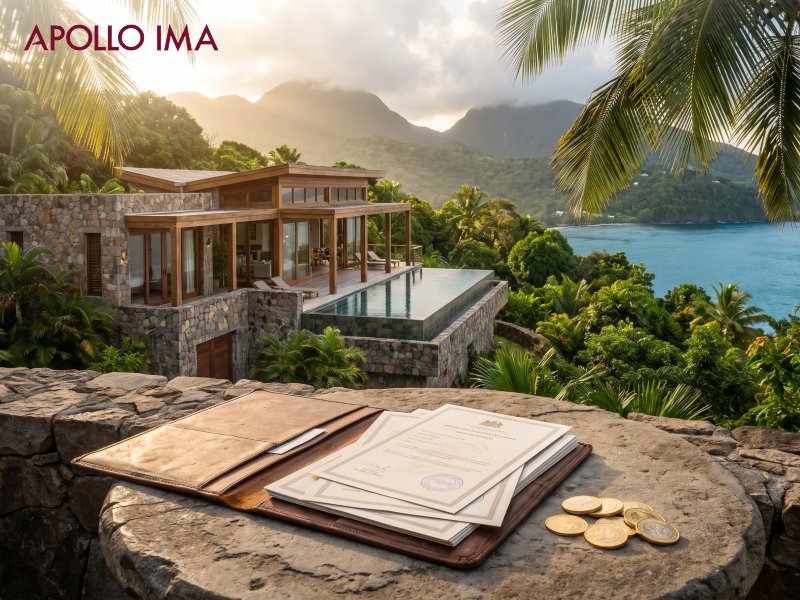
That three-versus-five-year distinction matters and gets skipped over often. A three-year hold gets you to open-market resale. A five-year hold opens a second resale channel, selling directly into the CBI pipeline, which can affect how easily the property moves depending on market conditions at the time.
Who Actually Qualifies as a Dependent
This is the part that needs to be specific, not vague. Under Dominica’s program, eligible dependents generally include:
- A spouse
- Children under 18
- Children aged 18 to 30, if enrolled in full-time education and financially dependent on the main applicant
- Dependent parents or grandparents, typically required to be aged 65 or older and financially supported by the main applicant
Each dependent goes through their own due diligence check, and the fee structure above applies per person added. Apollo IMA company confirms exact eligibility for each family member at the assessment stage, since specific age thresholds and support requirements are reviewed periodically by the CBIU.
Processing Timeline
Applications generally take five to eight months from a complete submission to passport issuance. That covers document verification, due diligence on every applicant listed, and final government approval.
Applicants aged 16 and over are typically required to complete a citizenship interview, conducted remotely in most cases. There’s no requirement to travel to Dominica to submit the application itself.
What’s Changed for 2026
A few procedural points have shifted or tightened recently, and it’s worth applicants going in aware of them rather than finding out midway through the process:
- Interview requirement. A formal interview for applicants 16 and older has become a standard part of due diligence, not an optional or occasional step.
- Contribution levels. The EDF minimum moved up from earlier, lower figures to the current US$200,000 threshold, in line with the Caribbean region’s shared minimum pricing framework.
- Reported travel requirement. Some current reporting indicates Dominica may introduce a requirement for new citizens to travel to the country once to collect their passport, rather than receiving it remotely. This hasn’t been confirmed across all official channels, so applicants should verify the current procedural requirement directly with their advisor before assuming either way.
None of these changes affect the core investment thresholds. They affect process and timing, which is exactly where applicants tend to get caught off guard if nobody flags it upfront.
What the Passport Provides
Once granted, Dominica citizenship comes with visa-free or visa-on-arrival access to more than 135+ countries and territories. There’s no obligation to reside in Dominica before or after citizenship is granted, and dual citizenship is fully permitted, so applicants don’t have to give up their existing nationality to qualify.
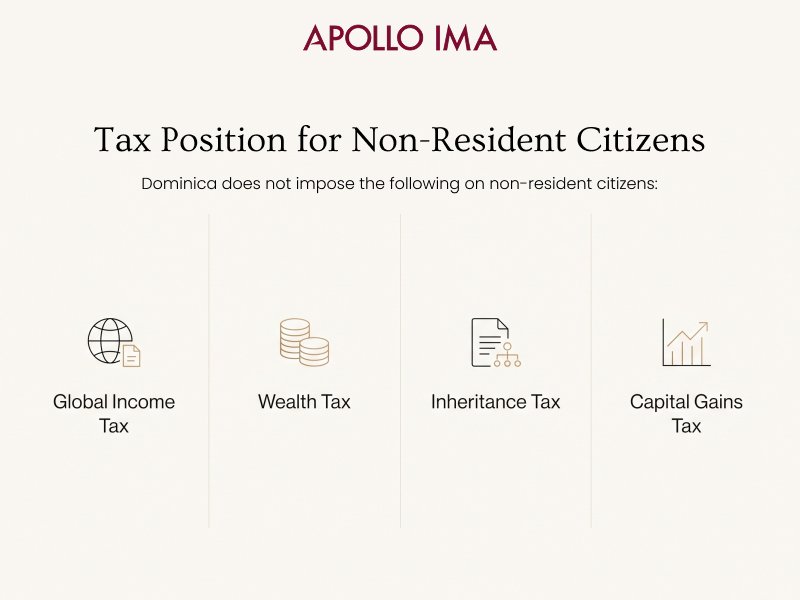
Tax Position for Non-Resident Citizens
Dominica does not impose the following on non-resident citizens:
- Global income tax
- Wealth tax
- Inheritance tax
- Capital gains tax
Whether that’s meaningful for a given applicant depends entirely on their existing tax residency and how their income and assets are already structured elsewhere. This isn’t something to plan around without proper tax advice, and Apollo IMA can point clients toward qualified counsel as part of the process.
How Dominica Compares on Entry Cost
Dominica generally sits at or near the lowest entry point among active Caribbean CBI programs, alongside Grenada, St Kitts and Nevis, Antigua and Barbuda, and Saint Lucia. For a full side-by-side on cost, timeline, and mobility, see Apollo IMA’s Caribbean citizenship by investment guide.
Is This Program Right for You
Dominica’s requirements tend to suit applicants who:
- Want the most accessible entry cost among Caribbean CBI options
- Prefer a defined, itemized dependent-fee structure rather than a flat family price
- Are comfortable with a real estate holding period if choosing that route over the EDF
- Don’t need residency or day-count requirements attached to their citizenship
If holding a longer-term asset with more flexible resale terms matters more than the lowest possible entry cost, it’s worth comparing this against Grenada or Saint Lucia’s real estate structures directly.

Confirm Your Eligibility With Apollo IMA
Apollo IMA is an independent global advisory firm working across citizenship by investment, residency by investment, international real estate, and international company formation. For Dominica specifically, the process includes:
- Reviewing the applicant’s and each dependent’s eligibility against current requirements
- Comparing the EDF contribution against the real estate route based on family size and goals
- Preparing and verifying the full due diligence file
- Coordinating directly with the Citizenship by Investment Unit
- Supporting the client through to passport issuance
Check your eligibility with Apollo IMA before submitting anything, particularly if your family includes dependents close to the age thresholds described above.
Read Also: St. Kitts and Nevis Passport Visa-Free Countries 2026
Frequently Asked Questions
What’s the minimum investment for Dominica citizenship in 2026?
US$200,000 through the Economic Diversification Fund, or US$220,000 through approved real estate.
How much does it cost to add a dependent?
US$25,000 for each additional dependent under 18, and US$40,000 for each dependent aged 18 and over, on top of the base contribution.
How long is the real estate holding period?
A minimum of three years for open-market resale, or five years to resell directly to another CBI applicant.
How long does the application take?
Generally five to eight months from a complete submission to passport issuance.
Do all dependents need to be interviewed?
Applicants aged 16 and older typically complete a citizenship interview as part of due diligence.
Do I need to live in Dominica to keep my citizenship?
No. There’s no residency requirement, before or after citizenship is granted.
Are there tax benefits to Dominica citizenship?
Dominica does not levy global income tax, wealth tax, inheritance tax, or capital gains tax on non-resident citizens. Individual outcomes depend on existing tax residency and should be reviewed with a qualified advisor.
Does the Apollo IMA firm handle the full Dominica application process?
Yes. Apollo IMA firm manages the process from eligibility assessment through to passport issuance.